
Woodridge Directory Sources by Era
No official page publishes a complete named directory run for Woodridge. That absence is important. The village incorporated in 1959, and pre-village residents may be filed under a township, farm, rural route, or nearby town. The reliable approach begins with the exact collection below and confirms whether its coverage page includes the address and year in question.
| Collection | Years | Where Held | Access |
|---|---|---|---|
| Woodridge early newspapers | 1959-2005 across listed titles | Woodridge Public Library | Print, microfilm, and a limited in-library image set |
| DuPage County Directory | 1925-26 | Illinois Digital Archives | Free page images online; predates incorporation |
| Historical directories and county archives | Exact Woodridge years not posted | DuPage County Historical Museum | On-site research; confirm title and year first |
| West-suburban Haines directory | Listed as current in a 1999 guide | Downers Grove Public Library | Nearby fallback; inspect its coverage page |
| Downers Grove phone books | 1942-43 and 1975-current in the 1999 guide | Downers Grove Public Library | In person; not proof of Woodridge coverage |
| Local photos and oral histories | Early farms through modern village memories | Woodridge Public Library | Public local-history collection |
The Woodridge Public Library local-history collection is the practical first call. Ask staff to check the SWAN catalog, storage, microfilm, and licensed databases for an exact title. The DuPage County Historical Museum Research Library is the strongest archival fallback because it specifically lists historical directories, maps, platbooks, 1950s-1970s real-estate files, personal papers, oral histories, and clippings.
Neither repository's public page confirms a Woodridge reverse-directory run. Record that as a collection gap. Do not turn a nearby phone book or county title into a claim that every Woodridge household appears.
Woodridge Progress Has Two Runs
The local newspaper trail often does the work that a missing alphabetical volume cannot. Woodridge Public Library provides keyword-searchable images of the Woodridge Progress from May 22, 1969 through December 28, 1978, but access is limited to the library. The Friends of the Library funded that digitization. Search names with a street, subdivision, school, church, election, or business term to reduce false matches.
The Illinois Newspaper Project holding record lists the Woodridge Progress from 1969 through 2005. That longer span is not the same as the searchable image subset. Later years may require print or microfilm work at the library desk. Save the newspaper title, issue date, page, and item type whenever a notice supplies a name or address.
Check the library's title-by-title early newspaper list before viewing the capture.
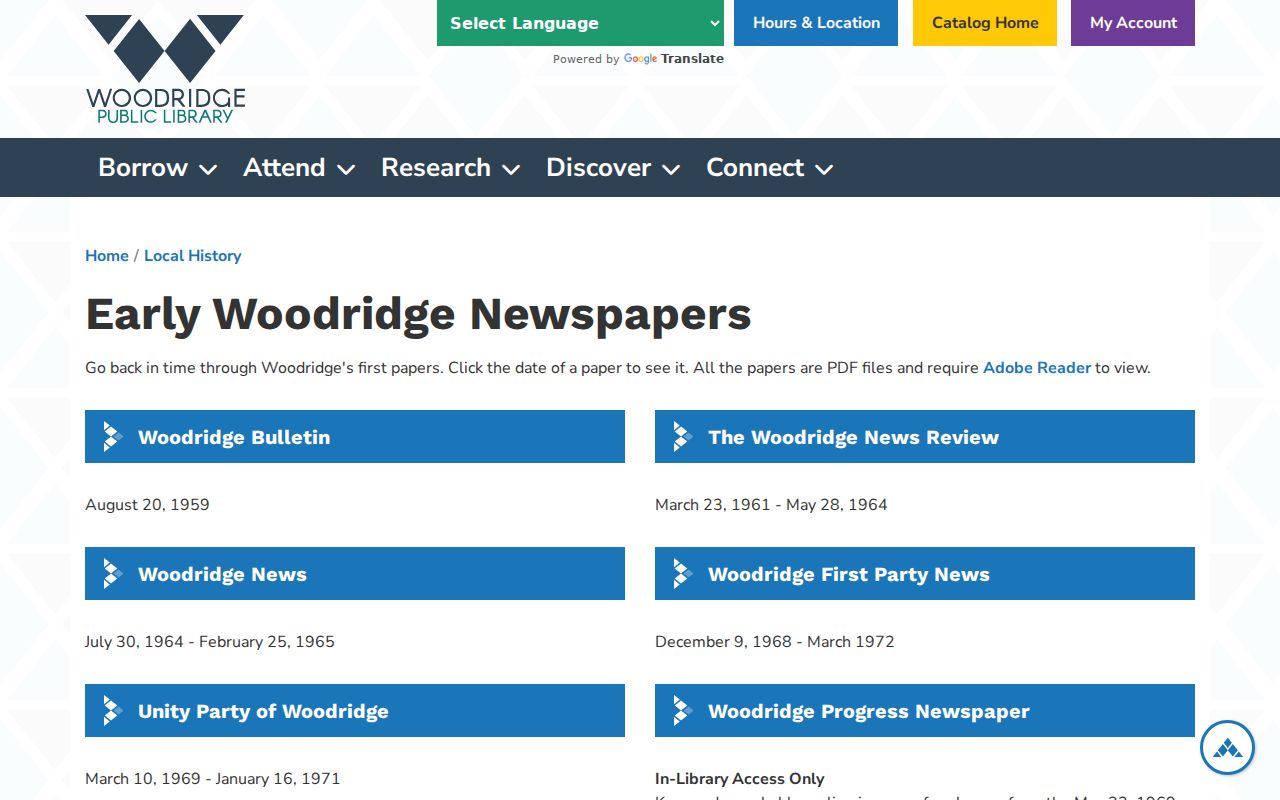
The title dates distinguish the short-lived founding papers from the much longer Progress holding, which prevents searches in years when a paper did not exist.
Early titles fill the years around incorporation: one Woodridge Bulletin issue dated August 20, 1959, Woodridge News Review from 1960-1964, Woodridge News in 1964-1965, and two party papers beginning in 1968 and 1969. These titles can reveal school events, subdivision notices, civic groups, obituaries, and moves.
Note: The searchable 1969-1978 images are a subset of the library's broader 1969-2005 Woodridge Progress holding.
Decode a Woodridge Directory Entry
The best official sample is a digitized 1925-26 DuPage County Directory page. It predates Woodridge incorporation and does not establish a Woodridge address. It does show how directory compilers compressed a household into one line, so it is a sound model for reading a later west-suburban volume.
Open the Illinois Digital Archives directory sample before reviewing the captured page.
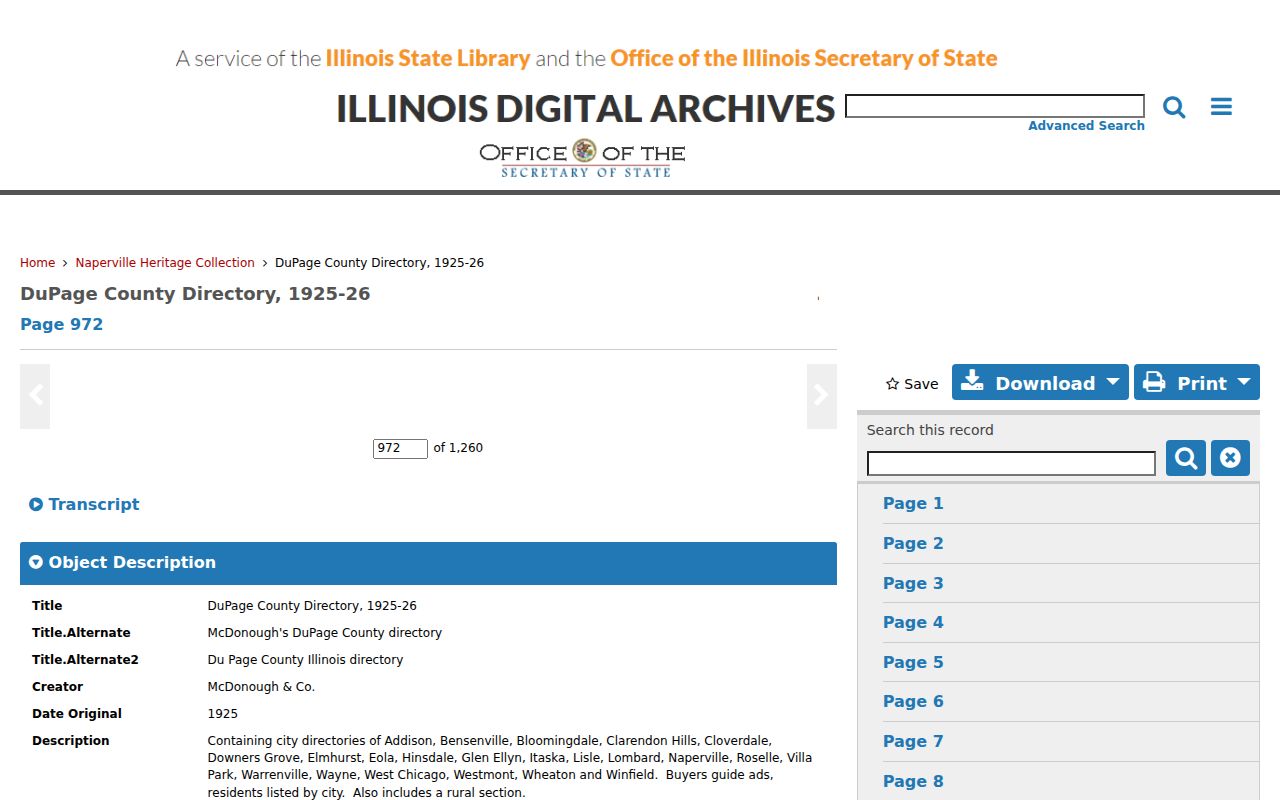
The scan shows why the abbreviation key matters: spouse, role, residence, and telephone data can sit on the same narrow line.
| Name | Surname and given name, sometimes followed by a spouse in parentheses |
|---|---|
| Role | Occupation, business, office, school status, or retired description |
| Residence | The marker “r” followed by the street address |
| Telephone | A historical exchange and number, not a present contact |
| Status words | Mrs., Miss, Rev., widow, student, clerk, or similar short forms |
- Criss-cross directory
- A directory arranged by street and house number rather than only by surname.
- Householder index
- A list centered on the household head, which may omit other people at the address.
- Abbreviation key
- The publisher's legend for marks such as “r,” spouse notes, and status labels.
Woodridge Directory Research Offsite
The DuPage Museum's archive is broader than a row of directory volumes. Maps, plats, real-estate records from the 1950s through the 1970s, newspaper clippings, family papers, photos, and vertical files can explain a name that never reaches a standard alphabetical directory. Ask for Woodridge, a subdivision name, an older farm name, and any nearby town label tied to the address.
Review the Museum's research and reproduction services before using the archive screenshot.
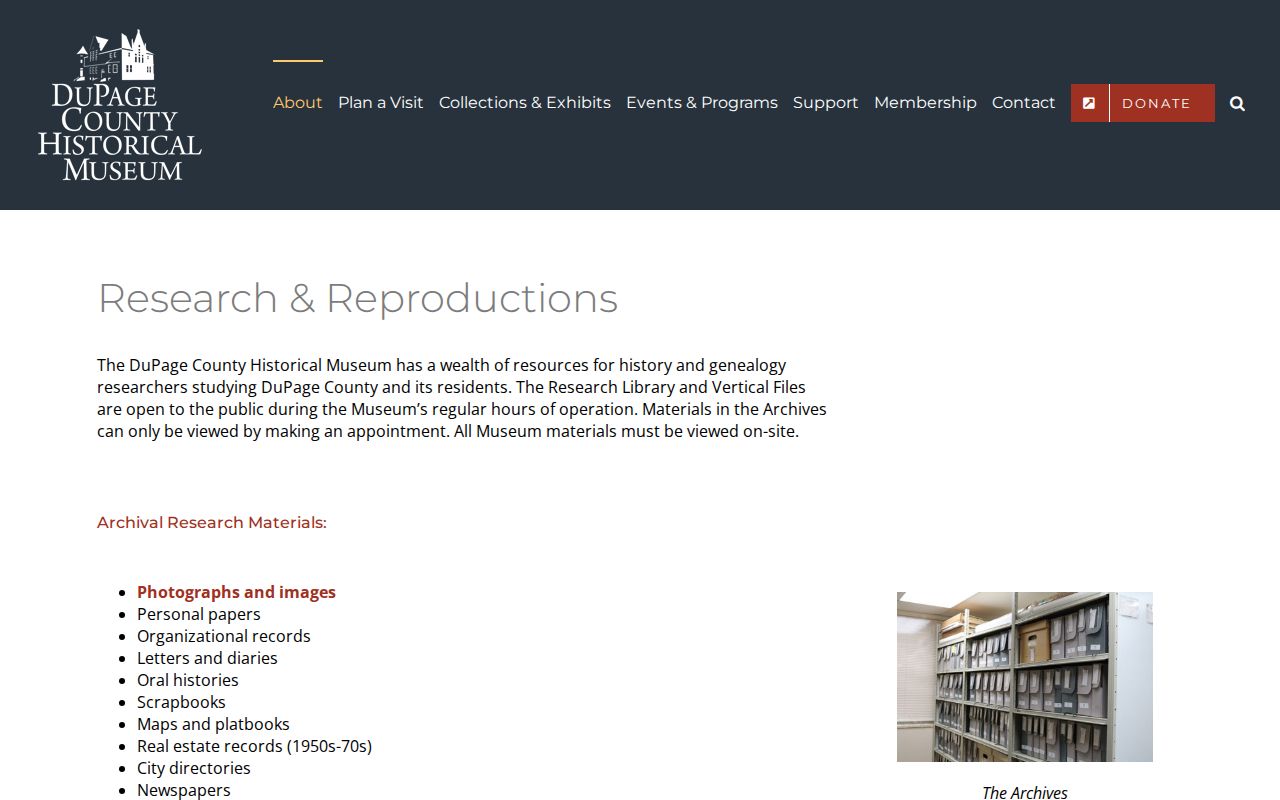
The holdings page supports an archive request, but it does not supply a complete Woodridge title-and-year inventory. Request the publisher, year, call number, reverse coverage, access rules, and permission to photograph an entry.
The nearby-library fallback also needs care. A state geological survey guide lists a west-suburban Haines directory, Downers Grove phone books, county atlases, and Downers Grove Sanborn maps. Those tools can establish regional context. They cannot prove that a Woodridge street appears until the volume's own coverage list is checked.
Woodridge Directories Begin With a Gap
Woodridge incorporated in August 1959 with 459 residents, and the 1960 population was 542. Its documentary pattern therefore differs from an old county-seat city with annual nineteenth-century volumes. The village's first local paper appeared near incorporation, while county land books and marriage records reach back to 1839. A family can have a long DuPage trail without appearing under the word “Woodridge” in an early index.
| Date | Record milestone |
|---|---|
| 1839 | DuPage county-board, marriage, and recorder-era records begin |
| 1925-26 | Digitized DuPage County Directory provides a pre-village entry model |
| 1959 | Woodridge incorporates and the Bulletin supplies a founding-era paper |
| 1969 | Woodridge Progress begins its long local-news run |
| 1978 | The library's keyword-searchable Progress image subset ends |
| 2005 | The Illinois Newspaper Project's listed Progress holding ends |
The absence of a complete digitized Woodridge directory is a repository fact, not proof that a household was absent. Preserve rural routes, township names, farm names, road spellings, and neighboring-town labels as the search moves backward.
Black Acres Links Farm to Suburb
The library's Black Acres project provides a distinctly Woodridge research path. The Nadelhoffer family purchased the farm in 1873 and sold it to developers in 1972 as taxes and suburban growth changed the land. A farm name may appear in oral history and news long before a modern street address exists.
Browse Woodridge Library's photos, videos, and oral histories before viewing the local-history capture.
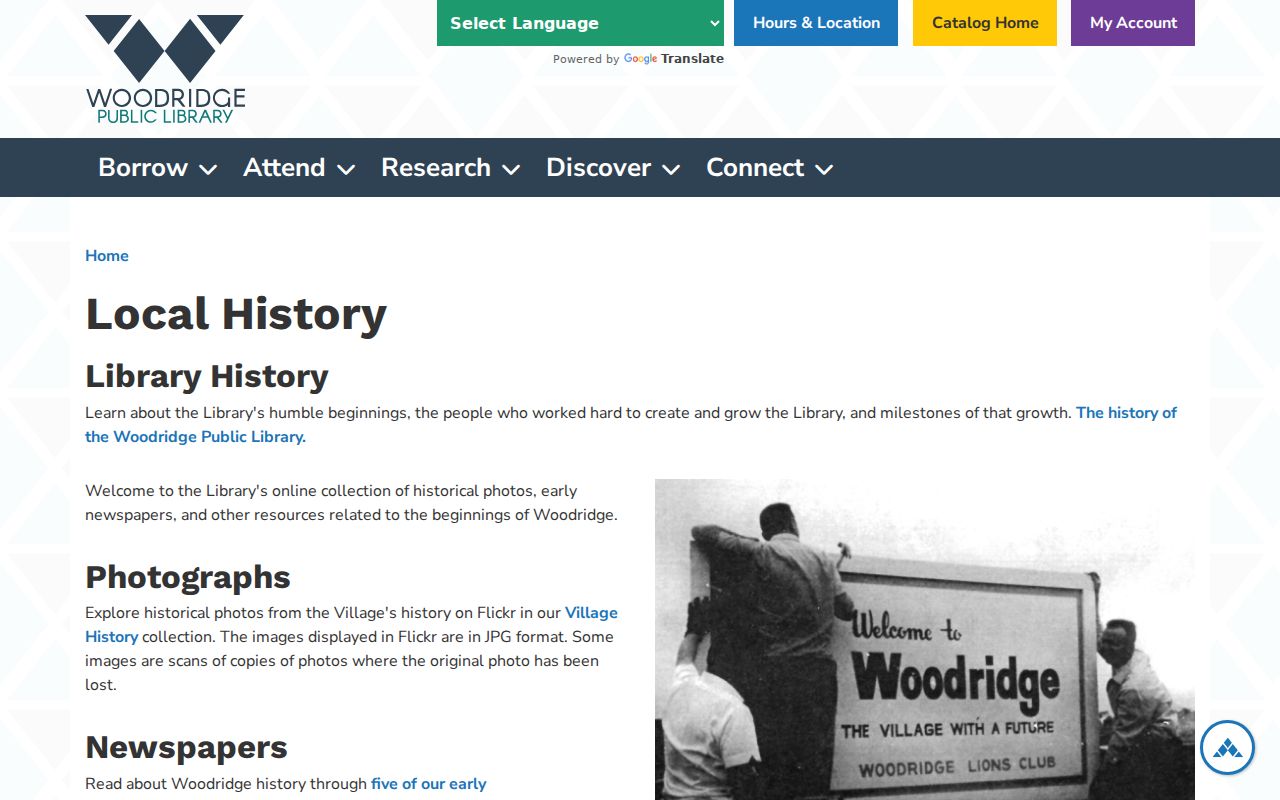
The library collection lets a researcher pair remembered names and places with recorder plats, museum maps, newspaper notices, and later directory entries. Oral history is evidence of memory and context, not proof of a current address.
Woodridge Archive Companion Sources
Library databases can bridge a year that has no verified printed volume. Woodridge Public Library lists Ancestry Library Edition for in-library use, including census, military, court, land, probate, vital, church, directory, and passenger collections. HeritageQuest is available from home with the first five digits of a library card barcode. FamilySearch is free, and the library also provides FamilySearch Affiliate access. Each database has its own license and coverage, so a search result should name the underlying collection rather than only the database.
Newspaper access adds two more routes. The library lists Chicago Tribune page images for 1849-1992 and full text from 1985 forward. Those regional notices can support a move, death, marriage, public event, or property clue found in a local entry. Search Woodridge Progress and News Review first when the event is local, then widen to the Tribune.
For Cook and Will County edge families, the South Suburban Genealogical and Historical Society lists regional phone books, yearbooks, cemetery and funeral-home records, church histories, area files, and FamilySearch service. Its holdings do not prove that a specific Woodridge address is covered. Ask for the precise title, locality, year, and access method before making a trip.
Trace Families Across Woodridge Directories
Begin with one name, one approximate year, and one place label. A historical directory entry may identify a spouse, occupation, street, or phone exchange. Each is a lead that must be checked elsewhere. The 1950 federal census is public under the 72-year rule, while later named census schedules remain closed. Newspapers and deeds bridge many of the years between the census and modern records.
- Search the nearest verified directory or newspaper year. Copy the entry exactly, including initials, spouse, abbreviations, and page.
- Move forward and backward through available years. Note a new street, rural route, widow label, or “moved to” reference.
- Pair 1950 or earlier entries with the census. Check township and enumeration-district descriptions when Woodridge was not yet the right place label.
- Use a deed, probate file, newspaper notice, school item, or obituary to test whether two same-name entries concern one person.
- Document missing years. Ask the library or museum about the exact volume instead of filling a gap with a commercial compilation.
The library's genealogy gateways add Ancestry Library Edition on site, HeritageQuest with qualifying card access, FamilySearch, and FamilySearch Affiliate resources. Chicago Tribune images and the Woodridge newspapers add regional notices. A person disappearing from a run might have moved, died, changed names, declined listing, or fallen into a missing year. No single explanation should be assumed.
The Woodridge resident lookup can test a historical name against modern official indexes without turning the directory entry into a claim about present residence.